How an Emergency Dentist Helps Protect Oral Health After Trauma
A blow to the mouth rarely stays a simple dental problem. It can affect speech, eating, appearance, jaw function, and in some cases the long-term survival of teeth that looked perfectly healthy before the injury. Trauma also creates a sense of urgency that is hard to overstate. A chipped front tooth after a fall may seem minor in the first hour, yet the same tooth can later develop nerve damage, infection, or cracking beneath the gumline if it is not assessed properly.
This is where an Emergency Dentist plays a critical role. The job is not limited to stopping pain or smoothing a sharp edge. Emergency dental care after trauma is about stabilizing the mouth, identifying hidden damage, preserving teeth when possible, and reducing the chance that a short-term injury becomes a chronic problem. Timing matters. Judgment matters even more.
Dental trauma shows up in many forms. A teenager catches an elbow during basketball and a front tooth shifts out of place. A cyclist falls and bites through the lip, leaving two teeth loose. An older adult trips on a curb and fractures a crown at the gumline. A worker takes an impact to the jaw and cannot bring the teeth together normally. These cases do not all look dramatic, but each one can carry consequences that are easy to miss without proper examination.
Trauma is often more complicated than it looks
One of the biggest misconceptions after an oral injury is that visible damage tells the whole story. It does not. Teeth can crack internally without a large piece breaking off. The ligament that holds a tooth in the socket can be bruised or torn even if the tooth still appears straight. The nerve inside the tooth may lose blood supply and die over days or weeks rather than immediately. Soft tissue cuts can hide fragments of enamel embedded in the lip or cheek.
An experienced emergency dentist starts by sorting the obvious from the dangerous. Pain level matters, but so do bite changes, mobility, bleeding that does not settle, and signs of injury to the jaw or supporting bone. In practice, two patients can present with what seems like the same chipped tooth, but one only needs smoothing and monitoring while the other has a vertical fracture extending below the gum and a poor long-term outlook. That distinction cannot be made by guesswork.
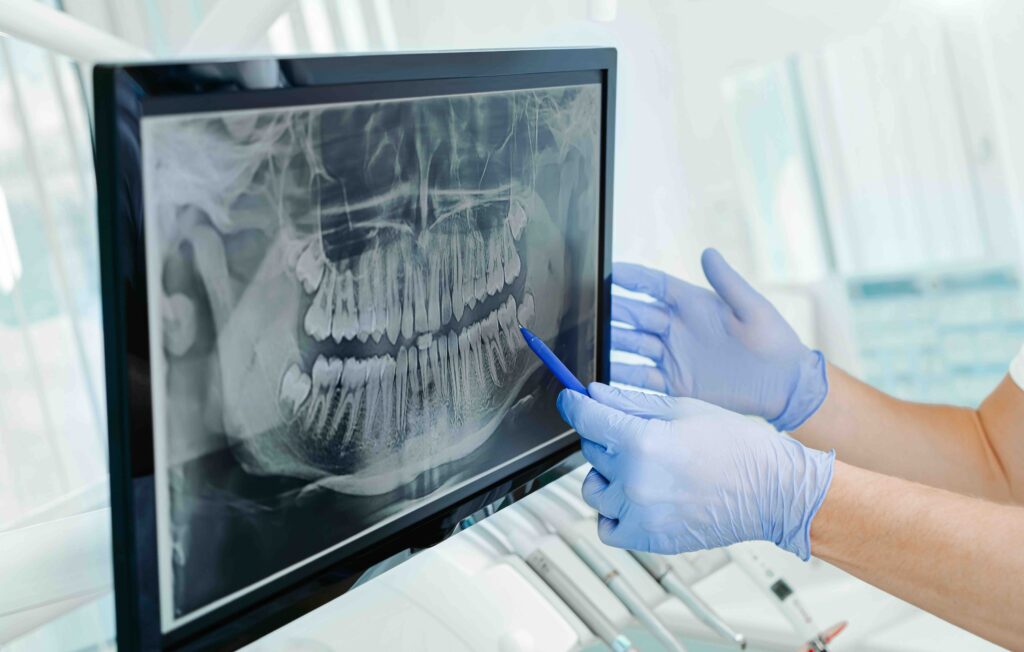
Radiographs are often part of the first visit because trauma likes to hide. Small root fractures, socket injuries, and bone involvement are not always visible during a mirror exam. Clinical testing helps too, though it has limits in the first few hours. A traumatized tooth may test strangely right away because the nerve is stunned, not dead. Good emergency care takes that uncertainty into account and builds a follow-up plan instead of making reckless assumptions.
The first goal is preservation
When oral trauma happens, preserving natural tooth structure is usually the best outcome. That does not mean every injured tooth can be saved, but it does mean an emergency dentist will often prioritize conservative steps that improve the odds.
If a tooth is displaced, repositioning it quickly can help the surrounding ligament heal in a more normal way. If a piece of tooth has broken off but the pulp is still protected, bonding the fragment or placing a durable temporary restoration can preserve both appearance and function. If a tooth has been knocked completely out, the speed and handling before arrival may determine whether reimplantation is possible.
There is a practical difference between repair and rescue. Repair fixes what is broken. Rescue protects tissues that are still viable but vulnerable. In trauma care, that second function is often the more important one.
A front tooth that is slightly pushed inward, for example, might not need immediate drilling or a crown. It may need careful repositioning, splinting, imaging, and close review over the next several weeks. The treatment sounds modest, but the purpose is significant: maintain blood supply where possible, limit additional injury, and give the tooth a fighting chance.
Time changes the outcome
For some injuries, every hour matters. The best known example is an avulsed tooth, a permanent tooth that has been knocked out entirely. The periodontal ligament cells on the root surface begin to lose viability once they dry out. Reimplantation has the best prognosis when done promptly and when the tooth has been stored properly, ideally in milk or a tooth preservation solution. A dry tooth wrapped in tissue or left on a counter loses precious time.
Other injuries are less dramatic but still time-sensitive. Deep cracks can propagate. Exposed dentin can become increasingly painful. A displaced bite can strain the jaw and make eating difficult. Soft tissue wounds may swell enough to complicate cleaning and closure if treatment is delayed. Even when a patient feels able to “wait and see,” the waiting sometimes turns a manageable case into a more invasive one.
This is why emergency dental triage is so valuable. Not every injury needs the same-day chair time of a severe abscess or uncontrolled bleeding, but many traumatic injuries deserve evaluation sooner than patients expect. A calm, structured assessment can separate those that require immediate intervention from those that can be stabilized and monitored with confidence.
What an Emergency Dentist looks for after a blow to the mouth
Trauma appointments often move in a deliberate sequence. The dentist first checks for urgent medical red flags. If there has been loss of consciousness, vomiting, dizziness, facial numbness, heavy bleeding, or suspected jaw fracture, medical evaluation may come before or alongside dental care. The mouth does not exist in isolation, and a dentist with sound judgment knows when another level of care is needed.
Once life-threatening issues are ruled out, the focus turns to the teeth, gums, lips, cheeks, tongue, and bite. A proper exam asks practical questions. Which teeth hurt to touch? Has the bite changed? Is there cold sensitivity? Are any teeth loose? Can the patient open comfortably? Was the tooth found, and if so, how was it stored? Did a fragment break off, and does the patient still have it?
These details shape treatment. A loose baby tooth in a small child is managed very differently from a displaced permanent incisor in an adult. A fracture limited to enamel is different from one that exposes the pulp. A tooth pushed sideways out of alignment is a different problem from one that is merely tender after impact.
At the clinical level, several findings often guide the early plan:
- Tooth position and mobility
- Presence of cracks, fractures, or pulp exposure
- Condition of the surrounding bone and soft tissue
- Bite alignment and jaw function
- Signs that follow-up pulp testing or endodontic treatment may be needed later
That list sounds straightforward, but experience makes a difference. Trauma cases do not always fit textbook patterns. A patient may have a relatively small chip and yet show a major bite discrepancy because of a subtle jaw injury. Another may have spectacular lip swelling but only minor dental involvement. The emergency dentist has to read the whole picture, not the most obvious feature.
Stabilization is more than pain control
Pain relief matters, of course. Sharp edges are smoothed, exposed dentin is covered, inflamed tissue is protected, and practical instructions are given for eating and oral hygiene. But stabilization goes beyond comfort.
A mobile tooth may be splinted to adjacent teeth with a flexible material that supports healing without locking everything too rigidly. A laceration may be cleaned thoroughly to remove debris and tooth fragments before closure. A fractured restoration may be replaced temporarily to restore the bite and shield the tooth. If swelling and bruising are prominent, the patient gets guidance that matches the injury pattern rather than generic advice.
One of the more overlooked parts of stabilization is occlusion, how the teeth meet. After trauma, even a small change in bite can create ongoing pain, tooth overload, or jaw strain. If a broken edge now hits first every time the patient closes, the tooth may remain tender even after the visible injury is patched. Adjusting the bite can be Emergency Dentist one of the most important things done during the visit, especially in cases where the injury has altered function.
Saving a knocked-out tooth depends on minutes, not days
Among all dental injuries, avulsion is the one that most clearly shows the value of urgent expert care. When a permanent tooth is knocked out, the root surface cells need moisture and gentle handling. Scrubbing the root, wrapping it dry, or delaying reimplantation can sharply Emergency Dentist reduce success.
The immediate priorities are simple:
- Pick up the tooth by the crown, not the root
- If dirty, rinse gently with milk or saline, not harshly
- Place it back in the socket if possible, or store it in milk
- Seek an Emergency Dentist right away
- Do not attempt to reimplant a baby tooth
Those steps are often the difference between a tooth that can be stabilized and monitored, and one that is lost for good. Even with ideal handling, a replanted tooth may later need root canal treatment or show resorption. But preserving the tooth, even temporarily, can maintain bone and buy valuable time for future options. That matters, especially for children and young adults whose long-term restorative needs are complicated by ongoing growth or esthetic demands.
Not every damaged tooth hurts immediately
Patients often assume the sorest tooth is the worst tooth. That is not always true. A tooth with a minor concussion injury can be very tender for a few days and then recover fully. Another tooth may feel surprisingly normal after impact, then darken weeks later because the pulp lost vitality.
This delayed pattern is why follow-up is part of proper trauma care, not an optional extra. A single emergency visit can address immediate threats, but oral injuries often unfold over time. Teeth that initially test normal may later fail vitality testing. Root resorption can develop months after the event. Pulp canal calcification may appear long after symptoms have faded. Children are especially important to monitor because immature teeth have different healing potential and different risks than fully developed adult teeth.
A good emergency dentist prepares patients for that uncertainty. Reassurance is useful only when it is honest. The right message is often, “We have stabilized the injury, and the tooth may do well, but it needs review because trauma can change things later.” That approach protects oral health better than false confidence.
Soft tissue injuries can leave lasting problems if ignored
When people think of dental trauma, they picture broken teeth. In practice, lip and cheek injuries deserve just as much attention. A cut inside the lip can trap enamel fragments. Dirt and grit from a fall can remain lodged in tissue and later cause tattooing or infection. Deep lacerations near the lip border may affect appearance if not closed carefully. Tongue injuries can interfere with speech and eating if swelling is severe.
Emergency dentists routinely inspect soft tissues for foreign material and hidden tears. In a bicycle fall or playground injury, it is not unusual to find a small tooth fragment inside the lip that the patient never noticed. If left there, it may continue to irritate, delay healing, or become visible on future imaging. These details are easy to miss in the confusion after an accident, yet they shape recovery in a very real way.
Children require a different kind of decision-making
Pediatric dental trauma is a category of its own. The stakes are high, but the rules are different. Injuries to baby teeth can affect the developing permanent teeth underneath, and aggressive treatment that would make sense in an adult can be the wrong move for a child.
For example, a primary tooth that is badly displaced may need removal rather than heroic efforts to save it, particularly if it threatens the developing permanent successor or creates aspiration risk. On the other hand, a young permanent tooth with an open apex has a stronger chance of healing or continuing root development if managed thoughtfully and reviewed closely. Those are not judgment calls that should be improvised.
Children also tend to present practical challenges. They may be frightened, unable to describe symptoms clearly, or resistant to examination after a painful incident. The emergency dentist needs technical skill, but also pace, communication, and restraint. Rushing a traumatized child through treatment can create a second problem in the form of long-lasting dental fear.
Adults and older patients bring different risks
In adults, trauma often intersects with previous dental work. A blow to the mouth may fracture an old crown, split a root under a large filling, or loosen a tooth that already had some periodontal support loss. The emergency plan has to account for that history. A heavily restored tooth may not have the same prognosis as an otherwise healthy natural tooth with the same visible injury.
Older adults may have added concerns such as thinner bone, multiple medications, dry mouth, or balance issues that raise the risk of repeat falls. They may also have implants, bridges, or partial dentures that complicate both diagnosis and function after trauma. An emergency dentist who treats these cases regularly understands that the injury is only part of the story. The patient's baseline oral condition matters just as much.
What patients should do before they are seen
The first hour after trauma can be chaotic, and small choices make a difference. Pressure with clean gauze can help control bleeding. A cold compress on the outside of the face can limit swelling. Rinsing gently with water helps clear debris, but vigorous swishing is not wise when a tooth is loose or a clot is forming. If a tooth fragment is found, keeping it moist and bringing it along may allow bonding that gives a more natural result than rebuilding from scratch.
Food and drink choices matter too. Very hot liquids, alcohol, crunchy foods, and chewing on the injured side often worsen pain or disturb the area. If the bite feels “off,” forcing the teeth together repeatedly to test it usually makes things worse. One of the most useful things a patient can do is simply stop manipulating the injury and seek prompt assessment.
The real value is long-term protection
The emergency phase is only one chapter in trauma care, but it can set the trajectory for everything that follows. A well-managed injury preserves options. It gives teeth, bone, and soft tissues the best chance to heal. It reduces the need for more extensive treatment later, though it cannot eliminate that possibility. It also helps patients understand what they are dealing with, which matters more than people sometimes realize. Uncertainty after trauma can be as distressing as pain.
What distinguishes a strong trauma response is not dramatic treatment. Often it is disciplined attention to fundamentals: accurate diagnosis, gentle handling, timely stabilization, realistic prognosis, and planned follow-up. A tooth that looks almost normal after a sports injury may still need months of observation. A tooth that seems hopeless at first glance may be saved if it is handled correctly and quickly.
That is the quiet importance of an Emergency Dentist in these moments. The work protects more than a smile. It protects function, comfort, confidence, and future treatment choices. After oral trauma, those things are worth acting on fast.